About us
Formed by Act No. 6 of 30th May 2014, NADDC is the dedicated Federal Parastatal regulating, promoting, and advancing Nigeria's automotive manufacturing ecosystem.
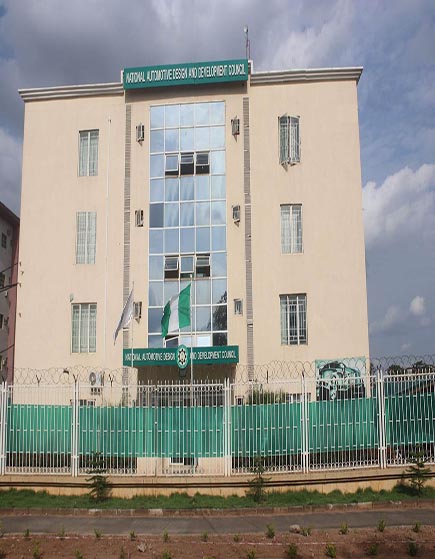
National Automotive Design & Dev. Council
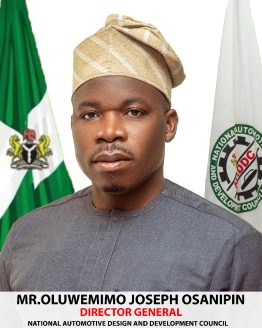
Otunba Oluwemimo Joseph Osanipin
CEO, NADDC
Welcome to NADDC
Positioning Nigeria as one of the leading automotive manufacturing nations in the world.
The National Automotive Design and Development Council was formed by Act no. 83 of 30th May 2014 from the merger of the National Automotive Council and the Centre for Automotive Design and Development as a Parastatal of the Federal Ministry of Industry, Trade, and Investment.
Our Mission
To create an enabling environment for the manufacture of Nigerian made vehicles of international standards at competitive prices, using local, human and material resources.
Our Vision
To position Nigeria as one of the leading automotive manufacturing nations of the world.
Our Mandates
- Develop and implement a National Automotive Policy
- Recommend incentives and protective measures for the development of the automotive industry in Nigeria
- Develop programmes for the acquisition of technology for vehicles and component design, manufacture and assembly
- Establish referral auto-test centres offering essential technical support services to the automotive sub-sector
- Advocate for the development and production of crucial raw materials such as sheet metal, alloys, and special steel
Positioning Nigeria as a Leading Automotive Nation
Automotive Trends
Forecast the demand and supply patterns for various types of automotive vehicles produced in Nigeria.
Industry Experts
Regularly study and review the automotive parts & components development industry in Nigeria.
Cutting Edge Solutions
Research, design, develop and test low cost vehicle prototypes for the Nigerian market.
Featured Programmes
Auto Industry Research Fund
The Council supports research work aimed at advancing the frontiers of technological development in the sub-sector.
Autoworkshop Exhibition
Workshops: Organize workshops on strategies to combat challenges in the Nigerian Automotive Industry.
Local Automotive Components
A major factor that has militated against the development of the sub-sector has been inadequate capitalisation and funding.
Mandate, Vision & Mission statements
Unlocking the Essence of NADDC
The National Automotive Design and Development Council’s vision is to transform Nigeria into a modern industrialized nation and our mission is to design and implement policies, programmes and strategies for an effective, competitive and diversified private sector.
Meet Our Senior Management Teams
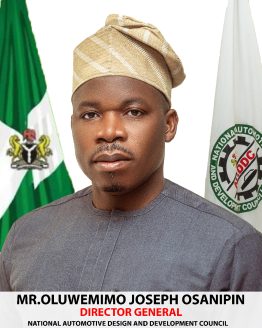 Executive Management
Otunba Oluwemimo Joseph Osanipin
Director General / Chief Executive Officer
Appointed by the President of the Federal Republic of Nigeria to steer the industrial modernization and local content growth of the nation's automotive manufacturing ecosystem.
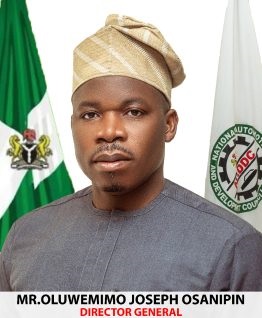 Executive Management
Engr. Fidelis Achiv
Director, Policy Planning & Research
Leads economic intelligence, fiscal tariff review committees, and NAIDP implementation frameworks across accredited vehicle assembly plants.
Executive Management
Dr. Vincent O. Okeke
Director, Industrial Infrastructure & Standards
Oversees the ISO accredited test centers, zonal mechatronics training institutes, and auto parts foundry industrial clusters.
Executive Management
Hajiya Maryam Ibrahim
Director, Finance & Accounts
Manages fiscal governance, statutory auto development fund allocations, and financial transparency protocols across the Council.
Executive Management
Barr. Chinedu Eze
Director, Legal Services & Board Secretariat
Provides strategic legal counsel, legislative liaison for auto policy bills, and regulatory compliance monitoring.
More Information about the NADDC
Explore statutory policies, service charter commitments, 20 regulatory functions, and the historical emergence of Nigeria's automotive industry.
The National Automotive Policy
- Government recognized the important and basic role of the automotive industry in the industrial development of Nigeria by resuscitating the standing technical committee on national automotive industry (STC on NAI) in 1990.
- The STC on NAI (now NADDC) with inputs from the Nigerian automobile manufacturers association (NAMA), and other organizations involved in the industry drafted the automotive policy for Nigeria.
- Presidential approval for the policy was given on May 28, 2014.
- The policy document was formally launched on May 28, 2014. The document provided for the establishment of the national automotive council as a parastatal of the federal ministry of industry.
- Act No. 6 of 2014 backed up the establishment of the council.
The thrust of the national automotive policy shall be to ensure the survival, growth of the Nigerian automotive industry using local, human and material resources. This is with a view to enhancing the industry’s contribution to the national economy, especially in the areas of transportation of people and goods.
The elements of this objective include:
- Provision of automotive vehicles for urban and rural areas.
- Accelerated technological development of the Nigerian economy.
- Increased employment opportunities for Nigerians.
- Conservation of scarce foreign exchange.
- Establishment of integrated Automotive Industry in Nigeria.
- Standardization and rationalization of the Nigerian automotive industry.
- Increased private sector participation in the establishment of the auto industry.
- Technology acquisition; and
- Creating conducive environment through the introduction of appropriate fiscal policy and monetary incentives.
Our Service Charter Deliverables:
- Regularly study and review the automotive parts components development industry in Nigeria.
- Evolve a local content programme specifying which component parts are to be continuously deleted from the imported Completely Knocked Down parts.
- Recommend incentive and protective measures to ensure compliance with approved local content programmes.
- Forecast the demand and supply patterns for various types of automotive vehicles produced in Nigeria and the basic raw materials requirements.
- Prevail on government to patronize local automotive industry to boost capacity utilisation through hire purchase scheme amongst others.
- Support plant/industry expansion and infrastructure needs through provision of soft loans.
- Establish a test centre for the certification of standards and quality assurance.
- Establish specialized training, design and development and mass production centres.
- Engage in capacity building and upgrading of manpower.
- Extend grants to support R & D activities in institutions.
- Through its Ombudsman Committee, respond to public complaints on locally manufactured products or the activities of manufacturers.
Expectation from the Automotive Industry:
- Reciprocate government gesture by offering their products at realistic prices.
- Be true and honest enough to furnish NADDC with information on their operations.
- Integrate auto parts certified by the Standards Organisation of Nigeria in locally assembled products.
- Disclose specific technical details to components/parts manufacturers to enable them produce as appropriate.
- Pursue local content deletion programme.
- Abide by all government rules and regulations.
The National Automotive Design and Development Council was set up primarily to initiate, recommend and supervise policies and programmes for locally manufactured vehicles and components. The functions include the following:
- Regularly study and review the automotive parts/ components development industry in Nigeria;
- Evolve a local content programme specifying which component parts are to be continuously deleted from the imported Completely Knocked Down (CKD) parts;
- Recommend incentive and protective measures for the development of the Nigerian automotive industry;
- Appraise and recommend new models of vehicles envisaged for the Nigeria market to ensure model rationalisation;
- Identify and classify the components and parts which can be standardised to ensure their interchangeability;
- Regularly evaluate the pricing structure and quality of the products of the Assembly Plants as well as imported vehicles and parts to ensure international competitiveness;
- Forecast the demand and supply patterns for various types of automotive vehicles produced in Nigeria and the basic raw materials requirements and equipment;
- Encourage the development and production of raw materials such as sheet metal, alloys and special steel needed by the automotive industry;
- Regularly review the penalties to be imposed for non-compliance with the guidelines and programmes specified by the Council;
- Carry out inspection and other quality assurance activities in factories, ports and roads in pursuance of other objectives specified above;
- Research, design, develop and test low cost vehicle prototypes;
- Establish referral auto-test centres to provide technical support services to automotive sub-sector;
- Liaise with the Association of Local Content Manufacturers of Nigeria, Manufacturers Association of Nigeria and other stakeholders to ensure that the existing installed capacities are fully utilised;
- Draft and recommend standards for the automotive industry;
- Develop programmes for the acquisition of technology for vehicles and components design, manufacture and assembly;
- Implement the National Automotive Policy;
- Develop and regularly review criteria for determining an automotive manufacturing plant;
- Mandate vehicle-manufacturing companies that import more than 10,000 vehicles of any brand per annum to establish an assembly plant in Nigeria;
- Monitor and ensure compliance with paragraph (r) of this section by setting a procedure for enforcement under this Act; and
- Perform such other functions as may be assigned it by the Minister from time to time.
NADDC mandate is to revitalize and grow the Nigeria automotive sector because of its multiplier effect on the economy. Nigeria has all the critical elements to develop a sustainable automotive industry. It has a large domestic market to meet critical output and trainable manpower abound.
The Genesis of the Automotive Industry in Nigeria
The beginning of the automotive industry in Nigeria dates back to the 1950s when private companies pioneered the establishment of auto assembly plants, but became significant in the era of oil boom, as a result of large inflow of income.
The Federal Government of Nigeria however, became involved in the industry between 1970-1980 when it entered into partnership with advanced countries such as Germany, America and Britain which led to the establishment of 2 passenger vehicle plants by (i) Peugeot Nigeria Ltd. (PAN), Kaduna (ii) Volkswagen of Nigeria Ltd. (VWON), and 4 Commercial Truck plants by (i) Anambra Motor Manufacturing Company (ANAMMCO), Enugu; (ii) Steyr Nigeria Ltd. Bauchi; (iii) National Truck Manufacturers (NTM), Kano; and (iv) Leyland Nigeria Ltd. Ibadan. These six assembly plants established by the Federal Government used Completely-Knocked-Down (CKD) kits, and had an installed capacity for producing over 100,000 vehicles annually by the 1980s with a provision for meeting a specific local contents.
Towards the end of 1980s the industry was negatively affected by a downturn in the economy, due to policy summersault and higher cost of locally assembled cars. By 2000, used foreign cars dominated the market in the country, the rise of which negatively impacted the development of backward integration in the industry. Thus in December 2012, the six assembly plants were privatized by the Federal Government.
Upon the approval of the Nigerian Industrial Revolution Plan (NIRP), The National Automotive Design and Development Council (NADDC) re-launched the National Automotive Industry Development Plan in 2014 as a critical component of the NIRP, basically to support and grow the local market, save needed forex, create jobs and drive local content in manufacture and technical expertise. The NAIDP approved in 2014 brought several dividends not limited to: 31 licenses granted for the production of cars, trucks and buses, unveiling of made-in-Nigeria Nissan Patrol SUV, unveiling of KONA Electric Vehicle and Compressed Natural Gas-powered Vehicles/Buses produced by local assembly plants.
The Nigeria Automotive Industry currently has an installed capacity to produce over 500,000 vehicles annually by local assembly plants which include A.G Leventis, Afri Ventures, Coscharis Group, Dana Motors, Iron Products Industries, Peugeot Automobile Nigeria (PAN) and Stallion Motors. Additionally Honda operates a fully owned subsidiary in the country to assemble its vehicles locally, while we have Innoson Motors (IVM) as one of the indigenous auto manufacturer in Nigeria.
Through the efforts of the National Automotive Design and Development Council (NADDC), the Federal Executive Council approved the new 2023 Auto Policy. The approved National Automotive Industry Development Plan (NAIDP) has embedded competitive yet protective fiscal and non-fiscal incentives needed by all relevant stakeholders such as automotive industry manufacturers/producers, investors, developers, etc. When applied, the fiscal and non-fiscal incentives is expected to boost local production of made-in-Nigeria vehicles, increase local content to about 40% and achieve the attainment of a 30% locally produced Electric Vehicles (EVs). The New NAIDP when implemented will generate 1 million jobs; enforce patronage of made-in-Nigeria vehicles by MDAs and other companies working on government contracts, boost Research and Development (R&D) and technology transfer.
The enforcement of its local content policy will bring about a complete turn-around in the following raw material industries: steel, aluminium, copper, plastics, rubber, paint, glass, electronics, textile, wood, etc. Further development is also expected in the following economic activities: dealership, finance and credit, logistics, advertising, repairs and maintenance, insurance, service parts, farm mechanization, agricultural produce transportation, EV charging stations, etc.
Offices & Test Centres
National Zonal Offices, Zonal Mechatronics Training Centers, and ISO Accredited Laboratories across Nigeria.
Abuja Headquarters
Council Headquarters & Administrative Operations
13 David Ejoor Street - Contact: +234 929 137 81 and +234 929 137 83. Open hours: Mon - Fri 8.00 am - 4.00 pm.
Ikeja Zonal Office & Emission Test Centre
South-West Regional Operations & Vehicle Emission Testing
No 10 Ayo Rosiji Crescent, GRA Ikeja, Lagos State. Hosts computerized vehicle emission testing dynamometers and regional manufacturer liaison.
Kano Zonal Office & Mechatronics Hub
North-West Regional Operations & Mechatronics Training
No 5 Rigi-Sharada Road, Industrial layout Phase II Kano, Kano state. Tel: 08062685811.
Owerri Zonal Office
South-East Regional Liaison & Technical Standards
No 9, Abriba Avenue, off MCC road, Owerri, Imo State.
Port Harcourt Zonal Office
South-South Regional Liaison & Maritime Logistics Auditing
No 2, Ogwuaga close, Off Okwuruola Street, Stadium road, Port Harcourt, Rivers State.
Jos Zonal Office
North-Central Regional Operations
Behind Kalwa Plaza, Jos, Plateau State.
Sokoto Zonal Office
Solar EV & Clean Mobility Outreach
Birnin Kebbi road, Off Kalambaina road, Sokoto, Sokoto State.
Yola Zonal Office
North-East Regional Operations & Agricultural Mechanization
Suleja Street, Off GRA road, Yola, Adamawa State.
Automotive Components Test Centre
Mechanical Stress & Component Durability Testing
Mechanical stress testing, suspension spring fatigue evaluation, brake friction benchmarking, automotive safety glass impact testing, rubber seals & elastomer endurance.
Automotive Materials & Vehicle Evaluation Test Centre
ISO 17025 Crash Simulation & Materials Evaluation
Vehicle full-chassis crash simulation, engine dynamometer power rating, metal tensile & metallurgical testing, composite material degradation analysis, noise & vibration harshness (NVH) testing.